Skip to content
← Care Center

Where rivers meet the sea.

The brackish rhythm.

Brackish keeping is about salinity discipline. Match the salinity of replacement water before it goes in, and let the estuary rhythm — partial changes, tannin refresh, root growth — become part of your routine.

🌡 75–82°F🧂 Specific gravity 1.005–1.010💧 20–25% every two weeks

Daily

A few quiet minutes

  • Top off with appropriate freshwaterEvaporation raises salinity — top off with freshwater and let the gradient settle.
  • Check salinityTypical brackish range: specific gravity 1.005–1.010.
  • Check temperatureTypical range: 75–82°F.
  • Observe fish behaviourWatch for aggression and stress — brackish communities need territory and cover.

Every Two Weeks

Water changes & cleaning

  • Perform a 20–25% water changePrepare replacement water separately and match salinity before adding.
  • Vacuum the substrateEstuary substrates trap waste — siphon the surface layer.
  • Clean the aquarium glassSoft algae films are normal; keep the viewing panes clear.

Monthly

Testing & deeper maintenance

  • Monitor ammonia, nitrite and nitrateSame safety targets: ammonia 0 · nitrite 0 · nitrate as low as practical.
  • Maintain filtrationRinse media in removed tank water; never untreated tap water.
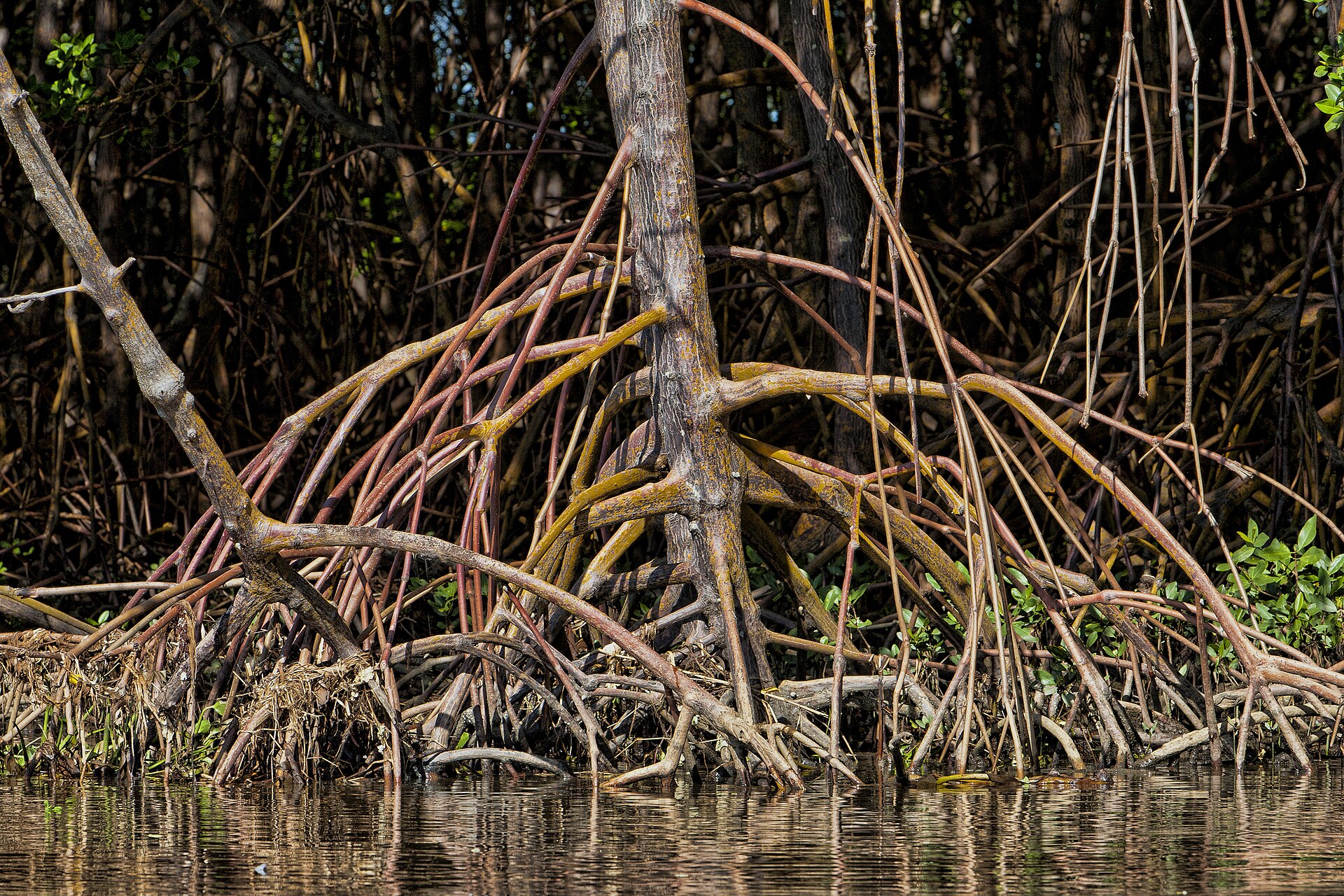
  • Trim plants and mangrove growthPrune roots and leaves where appropriate — mangroves grow fast.

Test targets

Numbers to aim for when your test kit asks.

Specific gravity

1.005 – 1.010

Between fresh and marine

Ammonia / Nitrite

0 ppm

Always zero

Nitrate

< 20 ppm

Mangrove plants help consume nitrates

pH

7.5 – 8.5

Slightly alkaline, like an estuary

General guidelines — species-specific requirements override these numbers. Always research your specific livestock.